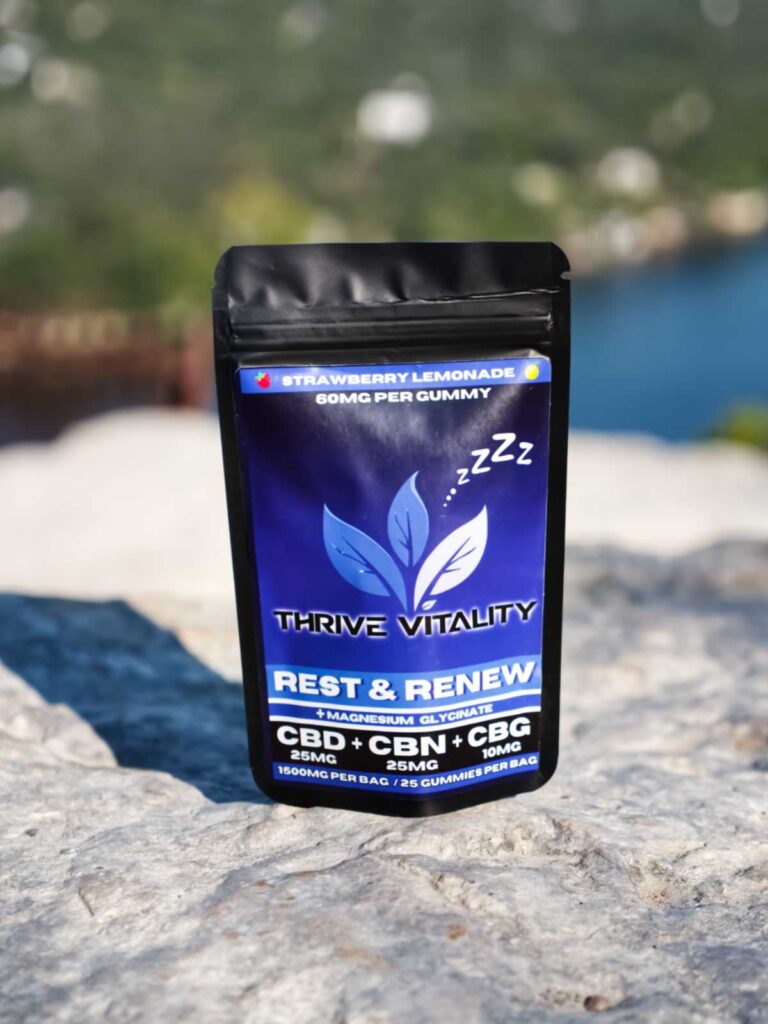
Cannabigerol (CBG): A Scientific Breakdown of the “Mother Cannabinoid”
Cannabigerol (CBG) is a non-intoxicating compound found in cannabis, known for being the “parent” cannabinoid. It’s not the most famous name in the hemp world, but it plays a crucial role behind the scenes. CBG is the direct precursor to THC, CBD, and CBC — meaning without it, none of the more well-known cannabinoids would exist.
Naturally, CBG is found in small amounts (often less than 1%) in most cannabis strains. This low presence has made it harder to study and harvest at scale. But with new agricultural techniques and targeted breeding, hemp strains high in CBG are now more accessible than ever.
Table of Contents

Chemical Structure and Biosynthesis

Chemical Properties
CBG has the molecular formula C₂₁H₃₂O₂, with a unique structure that sets it apart in how it interacts with the endocannabinoid system. It is non-psychoactive, meaning it does not produce a “high.” CBG becomes active following decarboxylation of its precursor, CBGA, through exposure to heat or light.
Biosynthetic Pathway
CBG is synthesized in the plant from CBGA (cannabigerolic acid), which forms through the condensation of olivetolic acid and geranyl pyrophosphate (GPP). CBGA serves as the universal precursor to the acidic forms of major cannabinoids:
- THCA (tetrahydrocannabinolic acid)
- CBDA (cannabidiolic acid)
- CBCA (cannabichromenic acid)
Enzymes such as THCA synthase, CBDA synthase, and CBCA synthase catalyze these conversions. If these enzymes are suppressed or absent, CBGA remains intact and decarboxylates into CBG during drying or heating.
Role in the Cannabis Plant
Although typically present at <1%, CBG’s significance is massive. It’s often described as the “stem cell” of cannabinoids due to its biochemical role in producing other cannabinoids. Recent breeding strategies aim to yield higher-CBG hemp strains, enabling more focused scientific research and product innovation.
Molecular Pharmacology of CBG

Cannabinoid Receptor Interactions
CBG binds with cannabinoid receptors, though not as strongly as THC or CBD:
- CB1 receptors: Found in the central nervous system. CBG acts as a weak partial agonist.
- CB2 receptors: Present in peripheral tissues and immune cells. CBG serves as a moderate agonist.
Non-Cannabinoid Targets
CBG also interacts with receptors outside the traditional ECS:
- TRPV1, TRPV2, TRPA1: These ion channels regulate sensory perception, pain, and inflammation.
- PPARγ: A nuclear receptor involved in metabolism and immune system modulation. CBG acts as an activator.
Enzymatic Modulation
CBG inhibits FAAH (Fatty Acid Amide Hydrolase), the enzyme that degrades anandamide, one of the body’s natural endocannabinoids. This could help extend anandamide’s presence in the body.
Preliminary evidence also suggests CBG may influence MAO (Monoamine Oxidase) enzymes, which are involved in neurotransmitter regulation.
Pharmacokinetics: Absorption, Metabolism, and Bioavailability

Absorption & Bioavailability
CBG has low oral bioavailability (under 10%) because of first-pass metabolism in the liver. Being lipid-soluble, its absorption is enhanced when consumed with dietary fats, making oil-based tinctures the most effective form.
Metabolism & Excretion
CBG is metabolized in the liver through Cytochrome P450 enzymes—notably CYP3A4 and CYP2C9. These enzymes perform hydroxylation, and the molecule is then conjugated with glucuronic acid for excretion via bile and urine.
How Long Does CBG Stay in Your System?
CBG can remain detectable in your system for 2–5 days, though this varies based on:
- Frequency of use: Regular use may lead to accumulation and longer retention in the body.
- Dosage: Higher doses typically take longer to clear from your system.
- Body fat percentage: CBG is lipophilic, meaning it binds to fat — individuals with higher body fat may retain CBG longer.
- Metabolism: Faster metabolic rates can lead to quicker processing and elimination of CBG.
- Method of consumption: Inhalation (e.g., vaping): rapid onset, shorter duration
- Sublingual (e.g., oils): moderate onset, moderate duration
- Oral ingestion (e.g., edibles or capsules): slower onset, longer duration
For daily users or those using higher doses, traces may remain for up to two weeks.
⚠️ Side Effects
Known side effects are generally mild and may include:
- Drowsiness or fatigue
- Dry mouth
- Diarrhea
- Appetite changes
⚠️ Drug Interactions
CBG is metabolized by cytochrome P450 enzymes, which are also responsible for breaking down many medications.
Potential interactions include:
- Blood thinners (e.g., warfarin)
- Anti-epileptics
- SSRIs
- Benzodiazepines
- NSAIDs
🩺 Always consult a healthcare professional before combining CBG with prescription medications.
Analytical Detection of CBG
Laboratory Techniques for CBG Quantification
- HPLC (High-Performance Liquid Chromatography) is the most accurate method for detecting both CBGA and CBG. It avoids degradation during testing.
- GC-MS (Gas Chromatography-Mass Spectrometry) is less ideal since heat can convert CBGA into THC or CBD, skewing results.
Standardization & Industry Compliance
- ISO 17025 certification ensures labs are qualified to test cannabinoids with precision.
- Third-party testing helps maintain transparency, purity, and labeling integrity—especially in a growing cannabinoid market.
Research Trends & Future Considerations

Increasing Interest in CBG-Dominant Strain
Breeders are investing in developing CBG-dominant strains with high CBGA content and minimal THC/CBD. This supports commercial production and opens doors to further pharmacological studies.
Potential Regulatory and Industry Challenges
Under the 2018 Farm Bill, CBG derived from hemp (<0.3% THC) is federally legal in the U.S. However, the FDA has not yet approved any CBG-based products for health use. Regulatory clarity, product definitions, and standardized testing protocols are still evolving.
⚖️ Compliance Note
Thrive Vitality promotes holistic wellness using non-intoxicating, hemp-derived cannabinoids. All products are lab-tested, non-GMO, and made with clean, organic ingredients. This content is for educational use only and not intended to diagnose, treat, or prevent any condition.
📘 Source References with Links
Cannabigerol in Cannabis Biosynthesis
PMC3417459
Inhibitory effect of cannabichromene… – Br J Pharmacol (2012
Cannabinoid CB2 Receptor Activation by Cannabigerol
PMC6932936
Cannabichromene is a cannabinoid CB2 receptor agonist – Br J Pharmacol (2019)