Cannabinol (CBN): A Scientific Guide to the Non-Intoxicating Cannabinoid
Cannabinol (CBN) is a non-psychoactive cannabinoid that forms naturally from THC as cannabis ages. Although classified as a minor cannabinoid, CBN is gaining major attention in the wellness world — especially in sleep support, calm-focused formulations, and anti-inflammatory applications.
Unlike CBD or THC, CBN is not directly biosynthesized by the cannabis plant. Instead, it’s the oxidative breakdown product of tetrahydrocannabinolic acid (THCA), forming over time when cannabis is exposed to light, heat, or oxygen.
Table of Contents

Chemical Structure and Biosynthesis
Chemical Properties

CBN has the molecular formula C₂₁H₂₆O₂. Structurally, it resembles THC but lacks the double bond responsible for THC’s intoxicating effects — explaining CBN’s non-psychoactive profile
📚 Source: PubChem – CID 25242274
Biosynthetic Pathway
CBN is not produced directly by cannabis biosynthesis. It forms via oxidative degradation of THCA:
- CBGA → THCA (via THCA synthase)
- THCA → THC (via heat/decarboxylation)
- THC → CBN (via oxidation over time or with light exposure)
📚 Source: Frontiers in Plant Science
Molecular Pharmacology of CBN
Cannabinoid Receptor Interactions
CBN has low affinity for both CB1 and CB2 receptors:
- CB1 (CNS): Weak agonism → No intoxication
- CB2 (immune tissues): Suggests role in inflammatory balance and immune modulation
📚 Source: British Journal of Pharmacology – PMC6932936
Non-Cannabinoid Targets
CBN also interacts with:
- TRPV2 channels – Potential influence on pain, inflammation, and temperature response
- PPARγ – Nuclear receptor tied to metabolic regulation and immune responses
- 5-HT1A – May play a role in mood balance and calming effects
📚 Source: Molecules – MDPI
Enzymatic Modulation
CBN may indirectly influence the FAAH enzyme, responsible for breaking down anandamide, an endogenous cannabinoid linked to mood, pain regulation, and calm.
📚 Source: PMC – Cannabinoid Modulators
Pharmacokinetics: Absorption, Metabolism & Bioavailability

Absorption & Bioavailability
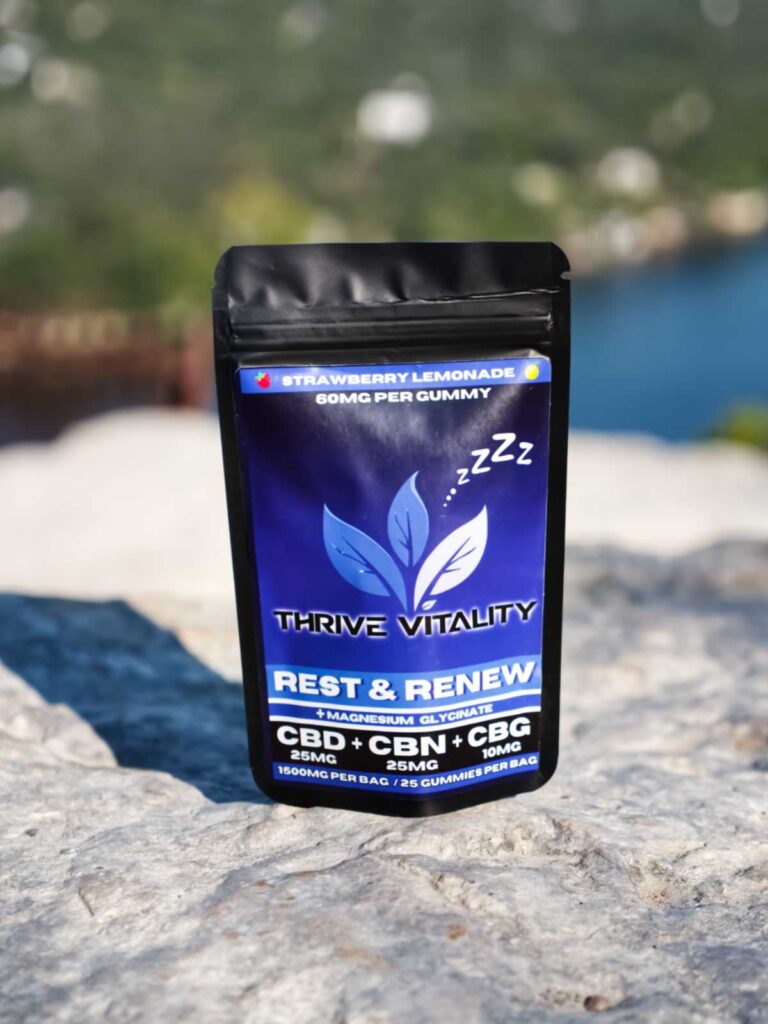
CBN bioavailability is improved with MCT oil for first-pass metabolism providing a higher efficacy like our Sleep Gummies.
📚 Source: Frontiers in Pharmacology
Metabolism & Excretion
CBN is metabolized by cytochrome P450 enzymes (particularly CYP2C9 and CYP3A4).
- It is excreted through urine and bile after hydroxylation and conjugation.
📚 Source: British Journal of Clinical Pharmacology – PMC6177698
How Long Does CBN Stay in Your System?
CBN can remain detectable in your system for 2–5 days, though this varies based on:
- Frequency of use: Regular use may lead to accumulation and longer retention in the body.
- Dosage: Higher doses typically take longer to clear from your system.
- Body fat percentage: CBN is lipophilic, meaning it binds to fat — individuals with higher body fat may retain CBN longer.
- Metabolism: Faster metabolic rates can lead to quicker processing and elimination of CBN.
- Method of consumption: Inhalation (e.g., vaping): rapid onset, shorter duration
- Sublingual (e.g., oils): moderate onset, moderate duration
- Oral ingestion (e.g., edibles or capsules): slower onset, longer duration
For daily users or those using higher doses, traces may remain for up to two weeks.
⚠️ Side Effects
Known side effects are generally mild and may include:
- Drowsiness or fatigue
- Dry mouth
- Diarrhea
- Appetite changes
⚠️ Drug Interactions
CBN is metabolized by cytochrome P450 enzymes, which are also responsible for breaking down many medications.
Potential interactions include:
- Blood thinners (e.g., warfarin)
- Anti-epileptics
- SSRIs
- Benzodiazepines
- NSAIDs
🩺 Always consult a healthcare professional before combining CBN with prescription medications.
Analytical & Extraction Methods

Supercritical CO₂ Extraction
CBN is typically extracted via:
- Supercritical CO₂ – Clean, safe, solvent-free
- Ethanol extraction – May be used with aged cannabis to maximize CBN content
📚 Source: Molecules – Cannabinoid Extraction
Chromatographic Testing
- HPLC (High-Performance Liquid Chromatography) is the gold standard for quantifying CBN and other cannabinoids.
- GC-MS (Gas Chromatography–Mass Spectrometry) is often used for advanced purity and degradation profiling.
📚 Source: ScienceDirect – Cannabinoid Chemistry
Sustainability and the Role of Hemp in CBN Extraction

Hemp as a Source for CBN
Although CBN forms more in aged cannabis, hemp-derived CBN is now extracted intentionally from stored or oxidized biomass.
Environmental Benefits
- Hemp cultivation supports carbon sequestration, improves soil quality, and requires less water than traditional crops
📚 Source: Frontiers in Environmental Science
Common Uses of CBN
CBN is widely included in wellness formulations such as:
| Product Type | Uses |
|---|---|
|
Tinctures |
Often used at night to support calm and sleep |
|
Capsules |
Easy, low-impact dosing for daily routines |
|
Topicals |
Formulated for muscle support, soreness, and recovery |
|
Gummies |
Mild calm support, usually in CBD:CBN blends |
Current Research Trends
- Neuroprotection: Studies suggest CBN may protect aging neurons
📚 Salk Institute Study - Sleep science: Being explored as a non-habit forming sleep-support compound
📚 Nature Neuroscience - Inflammation: CBN is under investigation for its immune-modulating role via CB2 and PPARγ activation
📚 Molecules – MDPI
Compliance Note
Thrive Vitality uses non-intoxicating, hemp-derived cannabinoids like CBN to support natural wellness. All products are lab-tested, non-GMO, and produced using clean extraction methods. This content is for educational use only and is not intended to treat or diagnose any condition.
🔗 List of References
- CBN Receptor Interactions – PMC6932936
- CBN & FAAH Enzyme – PMC3736954
- Pharmacokinetics of CBN – PMC6177698
- Systematic Review on Cannabinoids – Frontiers in Pharmacology
- CBN in Brain Health – Nature Neuroscience
- CBN & Cannabinoid Analytics – ScienceDirect